Fixed asset register
- Net book value today, straight-line, per asset
- $11,700
- Straight-line depreciation a year, per asset
- $3,400
- Straight-line depreciation a month, per asset
- $283.33
- Accumulated straight-line depreciation to date, per asset
- $6,800
Every figure on a worksheet comes from the inputs you enter and the method stated beside it: your cost, your salvage value, your useful life, your device counts and your scan results. Where a guide names a published rule, the document is cited with a path to the clause, and the figure is licensed in this repository's claims ledger before it appears on a page.
The figures start from a worked example ($11,700), one line from a typical small-company register. Change any input and the line recomputes as you type.
Download the Fixed asset register worked example (CSV)
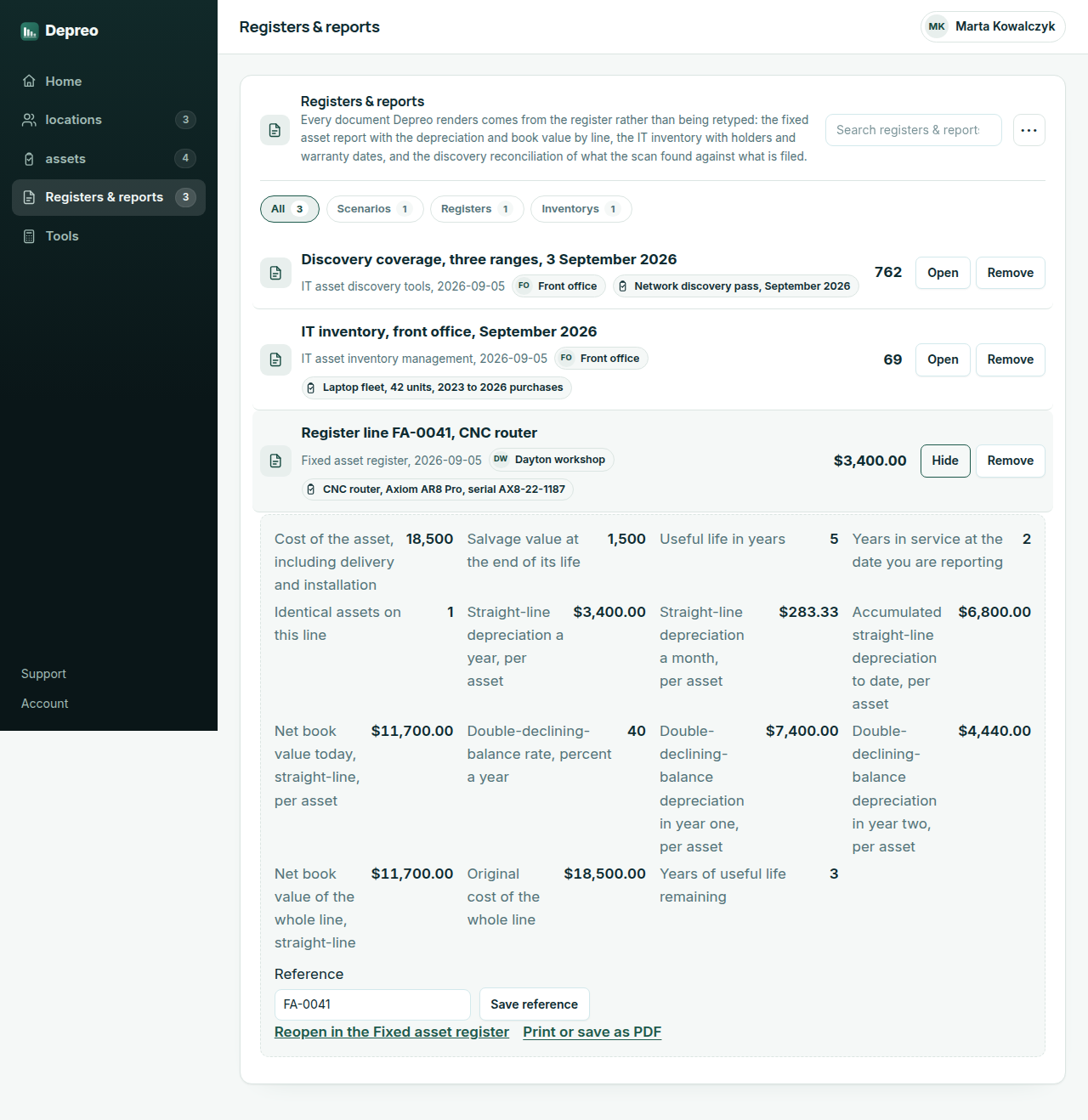
A fixed asset register is a list of what the organisation owns with the depreciation worked out on every line, and this worksheet is one line of it. It takes the cost of the asset including delivery and installation, the salvage value you expect at the end, the useful life in years, how long it has been in service, and how many identical assets sit on the line. It returns the straight-line depreciation a year and a month, the accumulated depreciation to date, the net book value today by the straight-line method, the double-declining-balance rate and its depreciation in years one and two, the book value and original cost of the whole line, and the years of life left. The methods are the two an accountant will recognise on sight, worked in full view so the figure on the register can be checked by anyone.
Fixed asset register: what register keepers ask
Which depreciation method should a small organisation use on its register? Straight-line is the one most small organisations use for their books because it is even, easy to explain and what an accountant expects to see. Double declining balance front-loads the depreciation, which suits assets that lose most of their value early, such as computers. The worksheet shows both so the choice is visible; the method for your tax return is a separate question for your preparer, and this page does not answer it.
What counts as the cost of a fixed asset? What it took to bring the asset into service: the invoice price, freight, and any installation or set-up needed before it could be used. Repairs after it is in service are expensed, not added to the line. Improvements that extend its life are a new line or an addition to this one, which is a bookkeeping decision the register should record with a date.
What happens on the register when an asset is sold or scrapped? The line is closed with the disposal date and the proceeds, and the difference between the proceeds and the net book value on that date is the gain or loss. The line is not deleted: the register keeps it, because the fixed asset report for the year and the auditor both need to see what left and for how much.
Depreo Pro
Keeping the register instead of the spreadsheet
Upgrading turns a worked line into a register. The asset you priced on the worksheet is filed against your organisation with its holder and location; the depreciation runs each period without anyone reopening a spreadsheet; a disposal is recorded with its date and proceeds; and the fixed asset report at year end is a print, not a project.
- Download the register as a file to send to your accountant or insurer
- Your register and reports without our name on them
- Save a line and reopen it next period with the depreciation moved on
- Your organisation name and logo on every printed register and report
- Take every register, report and inventory out at once
- Send a holder the list of what is issued to them from inside the register
- Not sold on this hub: a register keeper does not invoice from it
- Not sold on this hub: the fixed asset report exports to your accountant instead
$49per month, whole team
Start Depreo Pro PricingDepreo Pro is $49 per month for your whole organisation, billed monthly, and renews each month at that price until you cancel. The price and the renewal terms are shown again before checkout.